

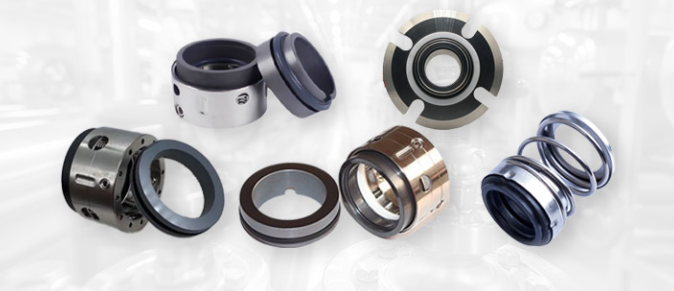
If you ask a pump mechanic, a plant buyer, and a seal distributor the same question — “which mechanical seal is best?” — you’ll get three different answers. The mechanic wants fast fitting. The plant buyer wants zero leaks and zero downtime. The distributor wants fast turnover, healthy margin, and fewer returns. That gap is exactly why cartridge, bellows, and pusher seals should never be sold as one generic “mechanical seals” bucket.
At Miaoyu, we see these three structures as three different businesses wearing the same shaft-sized costume. Below is how they really behave in wholesale: who buys them, why they buy, and how often the phone rings.
A pusher seal is the classic O-ring-mounted design. As seal faces wear, a spring pushes the rotating face forward along the shaft, and the O-ring slides to take up movement. Simple, clever, cheap to make — and absolutely everywhere.
Think of it as the white T-shirt of the sealing world: not glamorous, but everybody needs one.
Building HVAC circulators
Clean water booster pumps
Irrigation and agricultural pumps
Light chemical transfer
Italian/German end-suction pumps: Calpeda, Ebara, Pedrollo, Lowara, KSB, Grundfos
Cross-reference classics: John Crane Type 1, AES W01/W02, Roten Type 1, MG1
For distributors, pusher seals are cash-flow products. Unit price is modest, but transaction count is huge. A water pump doesn’t fail once every five years — it fails when the system isn’t vented, when grit enters, or when last year’s contractor overtightened the gland.
The catch? Pusher seals hate three things:
High temperature that bakes the O-ring
Crystallizing fluids that glue the secondary seal
Dirty, abrasive media that accelerate shaft fretting
When that happens, the customer doesn’t want a cheaper pusher. They want a bellows.
Miaoyu’s pusher range covers carbon/ceramic and carbon/SiC faces, NBR/EPDM/FKM elastomers, and 12–100 mm shaft sizes — the everyday cross-reference universe your sales team can quote without opening a textbook.
Bellows seals remove the sliding O-ring and replace it with a flexible element — rubber, PTFE, or welded metal. No O-ring to hang up. No shaft fretting from axial rubbing. The bellows becomes both spring and secondary seal.
Submersible sewage pumps live in hell: rags, sand, grit, grease, pH swings, zero mercy. A rubber bellows seal — especially Flygt-style plug-in / Griploc inserts — keeps raw sewage away from the oil chamber and bearings.
Municipalities buy forever
Lift stations fail seasonally
Repair contractors keep coming back
Shaft sizes are predictable
“Send me the Flygt 3068 seal” is a weekly sentence
Miaoyu builds Flygt 2000/3000-series bellow shaft seals, Roten/AES-style rubber bellows, and Grundfos rubber cartridge seals with EPDM/NBR options for water and light chemical duty.
Now we’re in hot oil, steam, bitumen, reactors, vacuum columns — places where an elastomer would turn to charcoal. Edge-welded metal bellows run where O-rings fear to tread: up to around 425°C with graphite static packs, Inconel 718, Hastelloy C-276, AM350, SiC/SiC or TC faces.
Wholesale logic changes completely:
Lower unit volume
Higher ticket value
Longer sales cycle
Stronger lock-in once you’re on the approved vendor list
A distributor who stocks a few metal bellows SKUs — and can cross-reference John Crane 606 or 10K27 — suddenly looks like an engineering partner, not a parts peddler.
A cartridge seal arrives pre-set: gland, sleeve, springs, faces, hardware, setting clips. The fitter slides it on, bolts the gland, pulls the clips, and walks away. No feeler gauges. No “did I set spring compression right?” No 3 a.m. argument about face direction.
Most seal failures are not material failures — they’re installation failures.
Water treatment plants: downtime is expensive
Food & beverage lines: hygienic, fast changeover
Chemical plants: double cartridge + barrier fluid = safer
Pump repair shops: fewer callbacks, fewer angry customers
Pharma utilities: documentation, traceability, CIP/SIP friendliness
Miaoyu’s cartridge program spans single cartridge, double cartridge, rubber cartridge for Grundfos CR/TP/NB, SiC/TC/ceramic/graphite face options, and direct-interchange styles for John Crane, Flowserve, Burgmann, AES, APV, and Alfa Laval platforms.
| Industry | Top Seller | Why | Distributor Play |
|---|---|---|---|
| Municipal water / wastewater | Rubber bellows + pusher | Huge pump count, dirty media, tight budget | Stock common shaft sizes + repair kits |
| HVAC / building services | Pusher O-ring seals | Standard pumps, low media risk | Win on cross-reference speed |
| Food & beverage | Sanitary cartridge + rubber bellows | Hygiene, fast CIP, low contamination | Sell “clean install”, not “cheap seal” |
| Pharmaceutical / biotech | Single & double cartridge | Validation, traceability, hazardous CIP fluids | Margin comes from docs + reliability |
| Chemical processing | Cartridge + PTFE/metal bellows | Corrosion, temperature, safety | Become the spec-friendly supplier |
| Oil & gas / refinery | Metal bellows, double cartridge | Heat, hydrocarbons, HSE exposure | Project quoting, alloy certs, API Plans |
| General MRO / repair shops | All three | They fix everything | Cross-reference library = moat |
The pattern is clear: pusher seals bring volume, bellows seals bring nasty-duty loyalty, cartridge seals bring margin and professionalism.
Don’t organize your catalog only by “seal types”. Organize it by customer panic level:
Panic 1: “My booster pump is leaking, send something today.” → pusher / rubber bellows
Panic 2: “This sewage pump keeps eating seals.” → debris-shedding rubber bellows, SiC seats
Panic 3: “We can’t have another chemical release.” → cartridge / double cartridge, documented materials
Panic 4: “Reactor agitator, 380°C, Hastelloy, don’t guess.” → metal bellows, engineered quote, material certs
A healthier wholesale mix looks like:
~65–70% pusher + rubber bellows in fast-moving sizes
~20% cartridge seals for water treatment, food, chemical MRO
~10% metal bellows / double seals / custom alloy jobs
That 10% doesn’t move every day — but it pays for the warehouse.
One roof, all three structures: pusher, elastomer bellows, PTFE wedge, metal bellows, single/double cartridge
Drop-in OEM interchange: John Crane, Burgmann, Flowserve, AESSEAL, Roten, Grundfos, Flygt, Alfa Laval, APV
Distributor economics: factory-direct pricing, private labeling, custom boxes, laser marking, SKU mapping
Cross-reference team that answers: pump model + shaft size + photo → shippable part number
Quality that protects your name: ISO 9001, lapped faces, leakage-tested assemblies, material traceability
Q1: Can I replace a pusher seal with a cartridge seal on the same pump?
Sometimes. A cartridge often needs more axial space and a compatible gland face. Miaoyu can confirm fitment from pump model + shaft size + existing seal photo.
Q2: Which seal type has the highest wholesale turnover?
Pusher and rubber bellows seals — water, HVAC, wastewater. Cartridge sells less often but carries better margin; metal bellows sell rarely but protect chemical/refinery accounts.
Q3: Are Miaoyu bellows and cartridge seals true OEM replacements?
They are engineered as drop-in, OEM-interchangeable replacements. Dimensions, spring loads, and gland patterns are matched to standard platforms; materials can stay equal or be upgraded.
Q4: What should a new distributor stock first?
Pusher/O-ring 12–35 mm, rubber bellows for Grundfos/Flygt/John Crane Type 1, and a small cartridge line for water-treatment/food pumps. Add metal bellows only after project inquiries arrive.
Q5: Why switch from a local trader to Miaoyu?
Traders resell uncertainty. Miaoyu gives factory pricing, engineering cross-reference, material upgrades, private labeling, QC, and one accountable supplier across pusher, bellows, and cartridge platforms.
Selling only pusher seals makes you a commodity shop. Selling only cartridge seals leaves water/wastewater volume on the table. Selling only metal bellows starves you between projects. Selling all three — with cross-reference support and factory backing — makes you a seal partner.
Miaoyu’s job is simple: make sure the answer always ends with “Yes, we can supply that — and it drops into the pump the customer already owns.”

Our company is specialized in the production of sealing materials, mechanical seals , cartridge seals.
E-mail: gechacha@aliyun.com
Mobile: +86-18758835650
WhatsApp: +86-18758835650
Add: No8-2, Jinsha road Yuelin Street, Fenghua District, Ningbo, Zhejiang


